Combating Low Health Literacy in Newly Diagnosed Type 1 Diabetics

Strategy & Design
Project overview
This is the terminal project of my Master's of Advertising and Brand Responsibility from University of Oregon.  
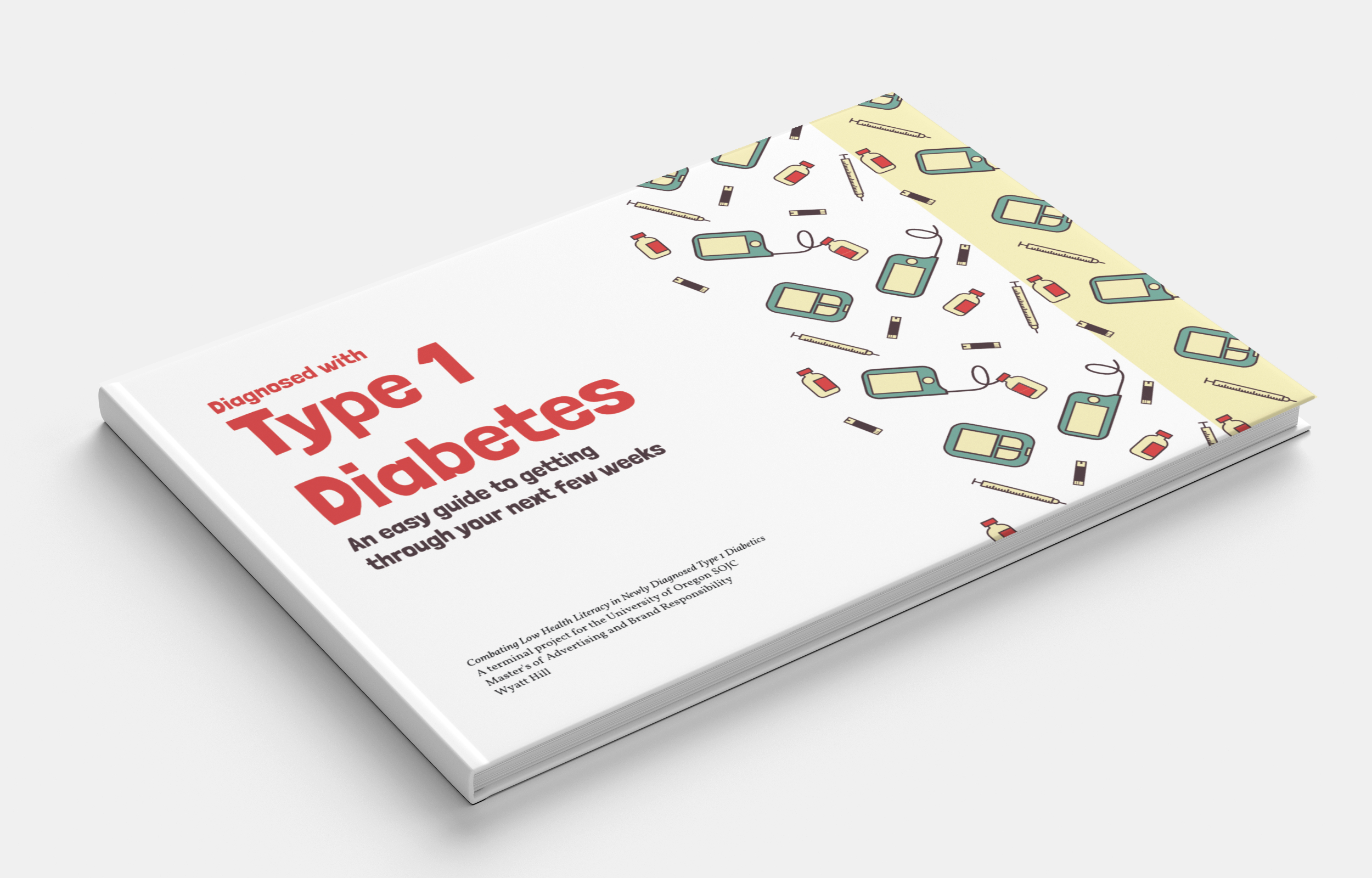
A book mockup with the title: "Diagnosed with Type 1 Diabetes, An easy guide to getting through your next few weeks"
The driving issue
1 in 4 newly diagnosed diabetics do not receive the care and management education they need about the disease at the time of diagnosis. (International Diabetes Federation)

Diabetes education resources are scattered. They're made by a variety of different brands, hospitals or clinics, or individuals. They all have different communication styles and strategies. Many are presented as single-sheet documents that are easily printed, and they're often focused on type 2 diabetes education. Newly diagnosed type 1s end up given a stack of mismatched, disorganized sheets of information, if anything at all.

The insight
Interviews with diabetics, parents, and healthcare professionals showed there were major issues in how diabetes education is presented.

There are distinct issues around education communication styles and fear-mongering about possible complications of the disease that interviewees believed were not helping the discussion at all. New type 1 diabetics need an easy-to-understand resource that communicates in a friendly and casual way, without too much complicated over-explaining of the physiology of the disease that does nothing to help them manage the disease.

‍
The solution
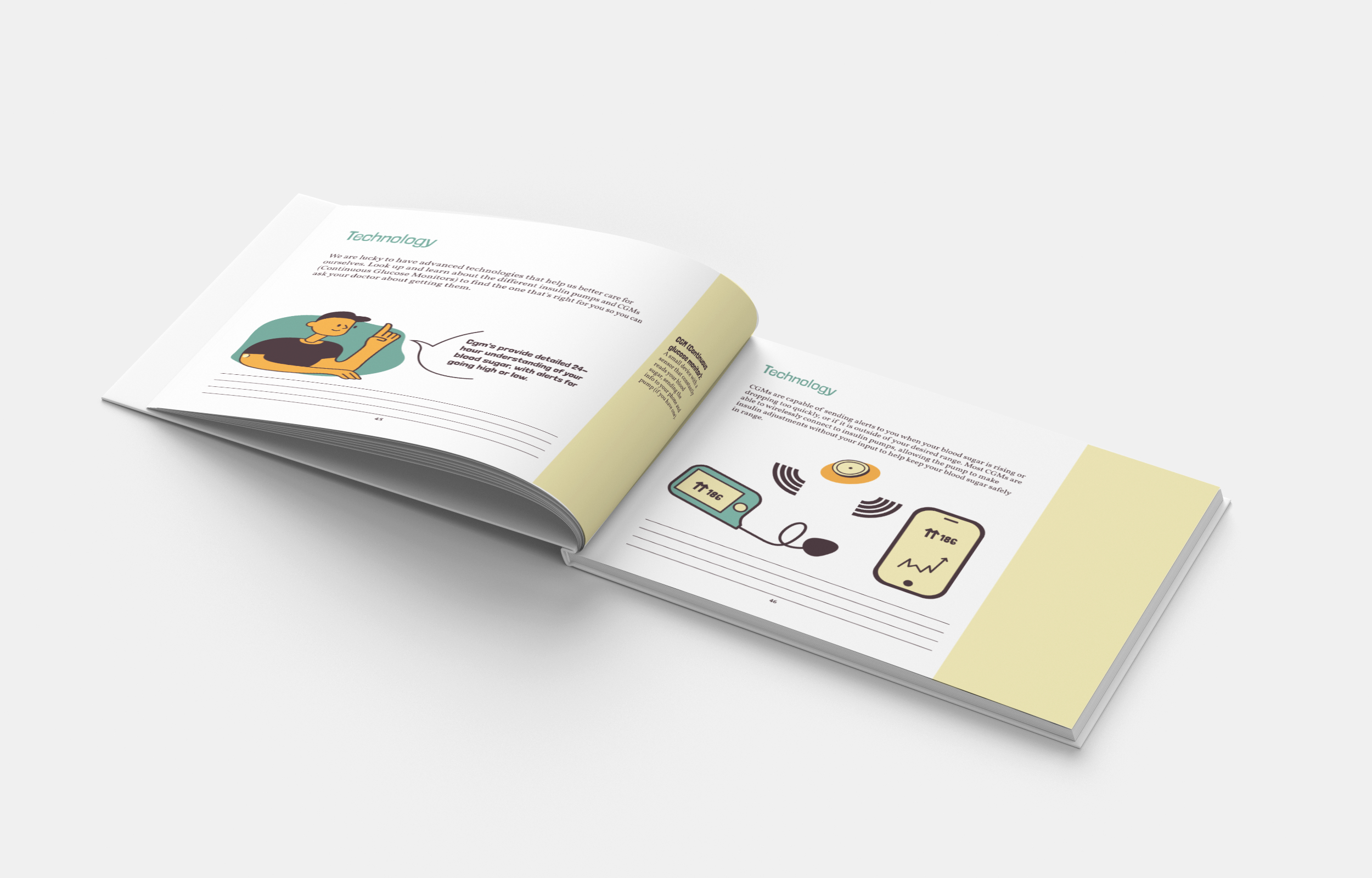
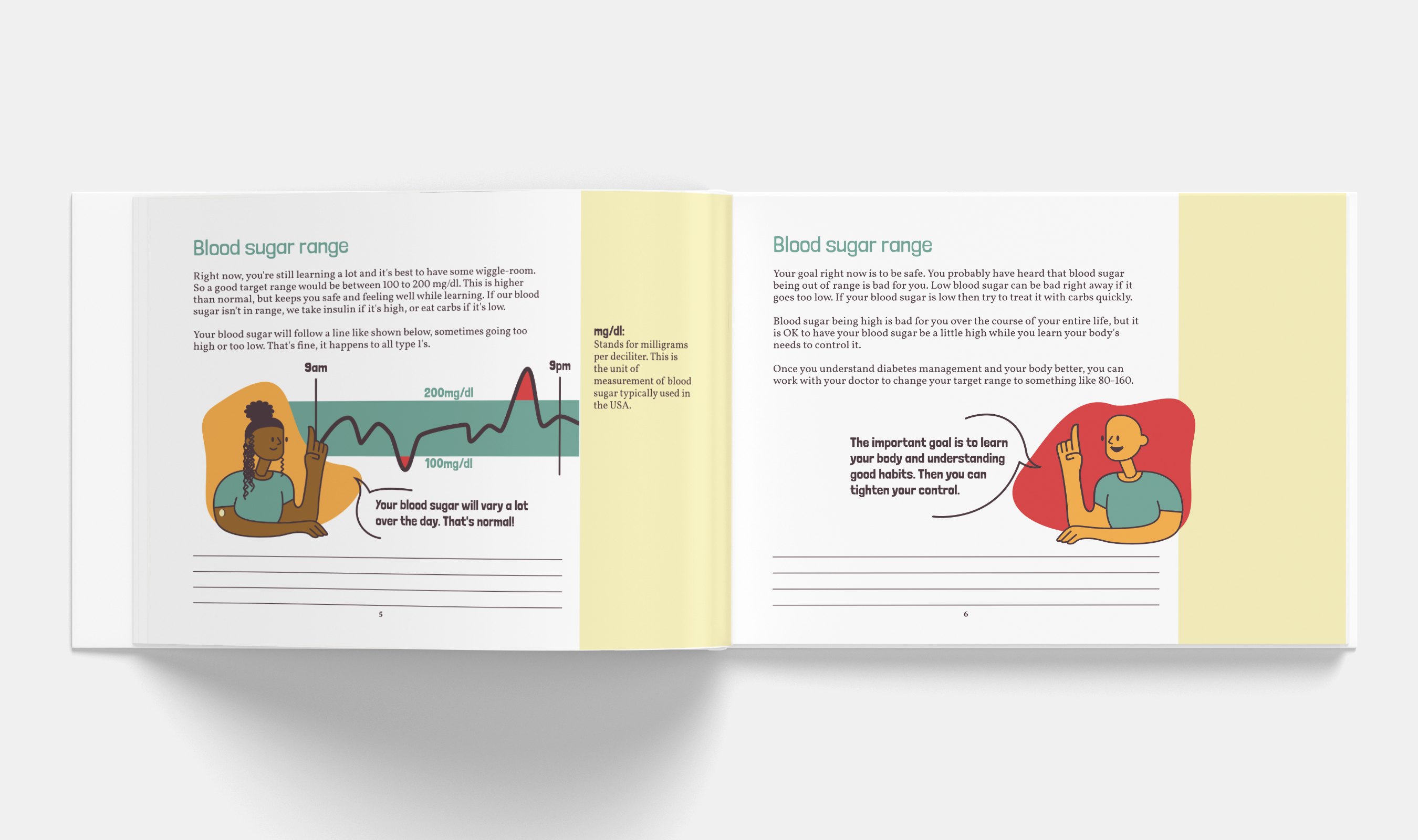
This educational booklet brings together all of the things that a newly diagnosed type 1 needs to know, without engaging in fear-mongering or overcomplicated scientific terms.  New terms that must be introduced are given simplified definitions.

Using a combination of the Health Behavior Model and Psychological Reactance Theory, the booklet is written to emphasize benefits of good self-care behaviors and covers what simple barriers may exist to those behaviors. It also avoids high-reactance phrases like "you must" or "you have to," which may cause a boomerang effect where the reader actually does opposite the desired behavior.